
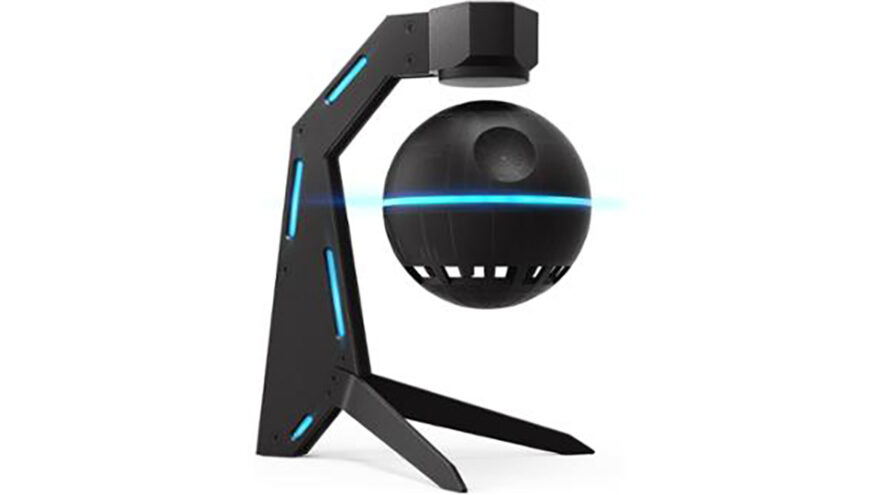
Most Bluetooth speakers follow the same formula: a box, a grille, a battery, and some drivers inside. They sit on a surface and play sound. Over the years, designs have improved, but the basic concept hasn’t changed much.
Magnetic levitation speakers break that pattern—not by redefining audio performance, but by changing how the speaker exists in physical space. A floating speaker that hovers and slowly rotates above its base is visually striking, immediately noticeable, and clearly different from standard portable speakers.
This article takes a practical, grounded look at magnetic levitation Bluetooth speakers as a category. It explains how they work, what they’re good at, where expectations should be tempered, and who is most likely to enjoy owning one.
What “Magnetic Levitation” Means in Consumer Speakers
Magnetic levitation speakers use opposing magnetic fields to suspend a lightweight speaker module above a powered base. When properly positioned, the magnetic forces balance gravity, allowing the speaker to hover in place.
Key characteristics of levitating speaker systems:
- The floating speaker contains the audio driver and battery
- The base contains the electromagnet and power circuitry
- Levitation only occurs when the base is powered
- The speaker typically rotates slowly while floating
This is not anti-gravity, and it’s not experimental technology. Magnetic levitation has been used in industrial and transportation contexts for decades. In consumer speakers, it’s adapted for visual effect rather than functional necessity.
Why Levitation Is About Design, Not Audio Superiority
It’s important to be clear about intent.
A levitating speaker is not designed to outperform:
- Large stereo systems
- High-wattage party speakers
- Audiophile bookshelf speakers
Instead, its primary value is aesthetic impact paired with functional audio.
The floating motion:
- Draws attention
- Creates a focal point in a room
- Turns a speaker into a display object
Sound quality is intended to be good enough for casual listening, not reference-grade.
Bluetooth Connectivity and Everyday Playback
Most levitating speakers use standard Bluetooth connectivity to pair with:
- Phones
- Tablets
- Laptops
- Desktop computers
Once paired, they behave like any other Bluetooth speaker:
- Play music
- Handle podcasts and video audio
- Respond to volume controls from the source device
Bluetooth versions vary by model, but in practical use, stability matters more than version numbers. In normal indoor environments, connection reliability is generally comparable to other portable speakers.
Power, Volume, and Realistic Sound Expectations
Levitating speakers are usually limited in output power by design constraints:
- The floating module must be lightweight
- Internal batteries are small
- Driver size is modest
In practical terms, this means:
- Volume is suitable for small rooms
- Bass is present but restrained
- Clarity is acceptable at moderate levels
They perform well for:
- Background music
- Desk listening
- Ambient sound
- Casual personal use
They are not designed for:
- Large gatherings
- Outdoor parties
- High-volume environments
- Deep bass reproduction
Understanding this distinction prevents disappointment.
The Floating Experience: What It’s Like Day to Day
When properly set up, the floating effect becomes surprisingly calming rather than distracting.
Common observations from owners:
- The slow rotation feels intentional, not gimmicky
- The motion adds depth to minimalist spaces
- It naturally draws curiosity from guests
However, levitation is sensitive to environment.
Things that affect stability:
- Uneven surfaces
- Vibrations
- Accidental bumps
- Power interruptions
Most systems include safeguards that gently lower the speaker if levitation fails, but it’s not something you want to constantly reposition.
Setup and Learning Curve
Setting up a levitating speaker is not difficult, but it does require patience the first time.
Typical setup steps include:
- Placing the base on a stable, level surface
- Powering the base
- Carefully positioning the speaker within the magnetic field
- Letting the system “lock in” to levitation
Once positioned, daily use is simple. But the first few attempts can feel finicky until you learn the correct placement.
This is not a plug-and-ignore device—it rewards deliberate setup.
Where a Levitating Speaker Makes Sense
Desks and Home Offices
In creative or modern workspaces, a levitating speaker doubles as:
- Ambient audio
- Visual interest
- Conversation starter
Living Rooms and Display Shelves
In curated spaces, the floating effect adds personality without cluttering surfaces.
Gift Scenarios
Levitating speakers often work well as gifts because:
- They’re unexpected
- They feel unique
- They don’t require technical knowledge to enjoy
They’re especially appealing for people who already have standard speakers.
Where It Probably Doesn’t
Levitating speakers are not ideal for:
- Audiophiles prioritizing sound accuracy
- People who want loud, room-filling audio
- Environments with pets or frequent movement
- Users who dislike delicate objects
They require respect for their physical setup.
Safety and Practical Considerations
Magnetic levitation speakers are consumer electronics, not toys.
Practical considerations include:
- Keeping magnetic fields away from sensitive items
- Avoiding frequent bumps or vibrations
- Placing the speaker out of reach of small children
- Understanding that levitation stops if power is lost
These are not dangerous devices, but they benefit from thoughtful placement.
Comparing to Traditional Bluetooth Speakers
Traditional speakers win on:
- Portability
- Durability
- Raw audio output
- Outdoor use
Levitating speakers win on:
- Visual impact
- Novelty
- Design integration
- Uniqueness
They solve different problems.
Longevity and Maintenance
Because levitating speakers involve more components:
- Magnets
- Sensors
- Power circuitry
They are best treated as stationary devices rather than portable ones. With stable placement and moderate use, they generally hold up well, but they’re not designed to be tossed into bags or moved daily.
Managing Expectations: The Most Important Step
The biggest mistake buyers make is expecting a levitating speaker to replace a full audio system.
When expectations are aligned:
- Owners enjoy the visual experience
- Sound quality feels appropriate
- The speaker becomes part of the space rather than the centerpiece of entertainment
When expectations are misaligned, disappointment follows.
Final Perspective
A magnetic levitation Bluetooth speaker is best understood as functional design, not pure audio equipment.
It plays music reliably. It looks unlike anything else on the shelf. It turns sound into a visual object.
For people who value aesthetics, conversation-starting tech, and ambient listening, it offers something genuinely different. For those seeking maximum volume or audio fidelity, traditional speakers remain the better choice.
When chosen for the right reasons, a levitating speaker isn’t a gimmick—it’s a deliberate design statement that happens to play music.